

Tran Luu Hau: A Distinctive Figure in Vietnamese Art
In the stream of modern Vietnamese art, the painter Tran Luu Hau is one of the names who left a special mark through a free-spirited creativity and a highly individual use of color. While many painters of his generation focused on portraying life through images close to reality, Tran Luu Hau constantly searched for new modes of expression, turning familiar scenery into structures rich in emotion.
Born in 1928 and passing away in 2020, he lived through a remarkable period of Vietnamese history, from the years of resistance and the building of the country to the strong changes in art after Doi Moi. Over a journey of several decades, Tran Luu Hau created, taught and inspired many generations of young artists.
The Painter Tran Luu Hau
Tran Luu Hau is a representative painter of modern Vietnamese art. He came of age during the resistance war against the French and took part in the Resistance Art School led by the painter To Ngoc Van.
After his studies in Vietnam, Tran Luu Hau went to the Soviet Union and studied at the Surikov Art Institute in Moscow, where he was exposed to academic art training as well as many international artistic ideas.
After returning to Vietnam in 1962, he spent many years teaching at the Vietnam University of Fine Arts. Alongside his creative work, the role of teacher became an important part of his career.
Tran Luu Hau’s contributions to Vietnamese art were recognized with the State Prize for Literature and Art in 2001.
What is noteworthy about Tran Luu Hau is that, despite living through many different historical periods, he kept his spirit of exploration. For him, painting was not only about reproducing a scene but also a way for the artist to express emotion and his own view of the world.
What Makes Tran Luu Hau’s Painting Style Special?
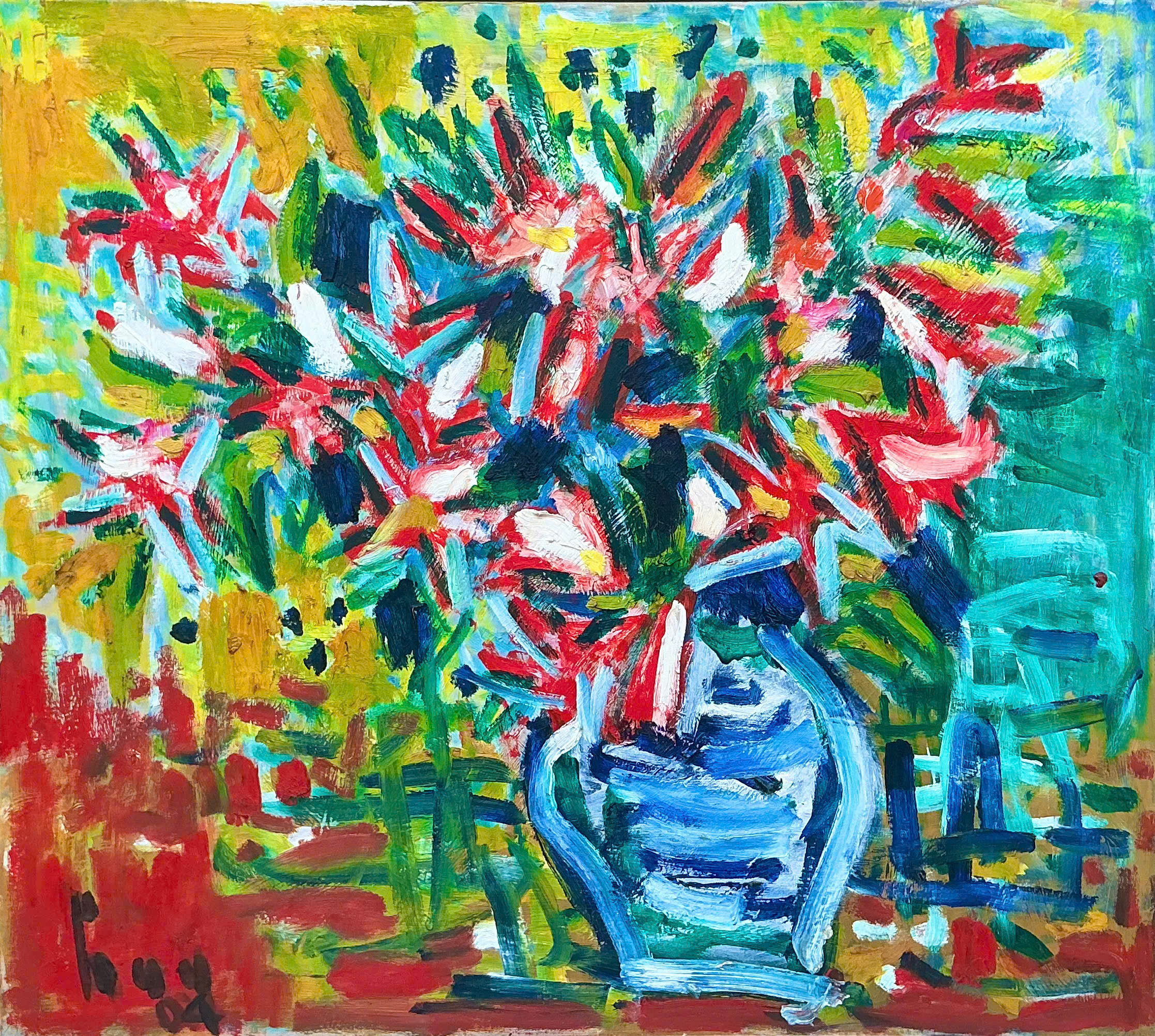
When it comes to Tran Luu Hau’s paintings, powerful color and brushwork are often the most noticeable features.
He did not rely too heavily on describing every detail of a scene accurately. Instead, images could be simplified, transformed or reorganized into areas of color and lines rich in rhythm.
Free and Energetic Brushwork
In many works, Tran Luu Hau’s brushstrokes create a direct, strong feeling. Areas of color are placed side by side with clear contrast, giving life to the surface of the painting.
Lines do not necessarily have to be soft or perfectly accurate in form. What matters more is the ability to convey emotion.
Color as a Language of Expression
Red, yellow, green, purple, black and many other colors play an important role in his paintings. Color is not used merely to describe an object but also helps determine the atmosphere and emotion of the whole work.
For this reason, a landscape in a Tran Luu Hau painting may still let viewers recognize the original place or subject, yet the organization of color makes the scene different from its appearance in real life.
From Reality to Expression and Abstraction
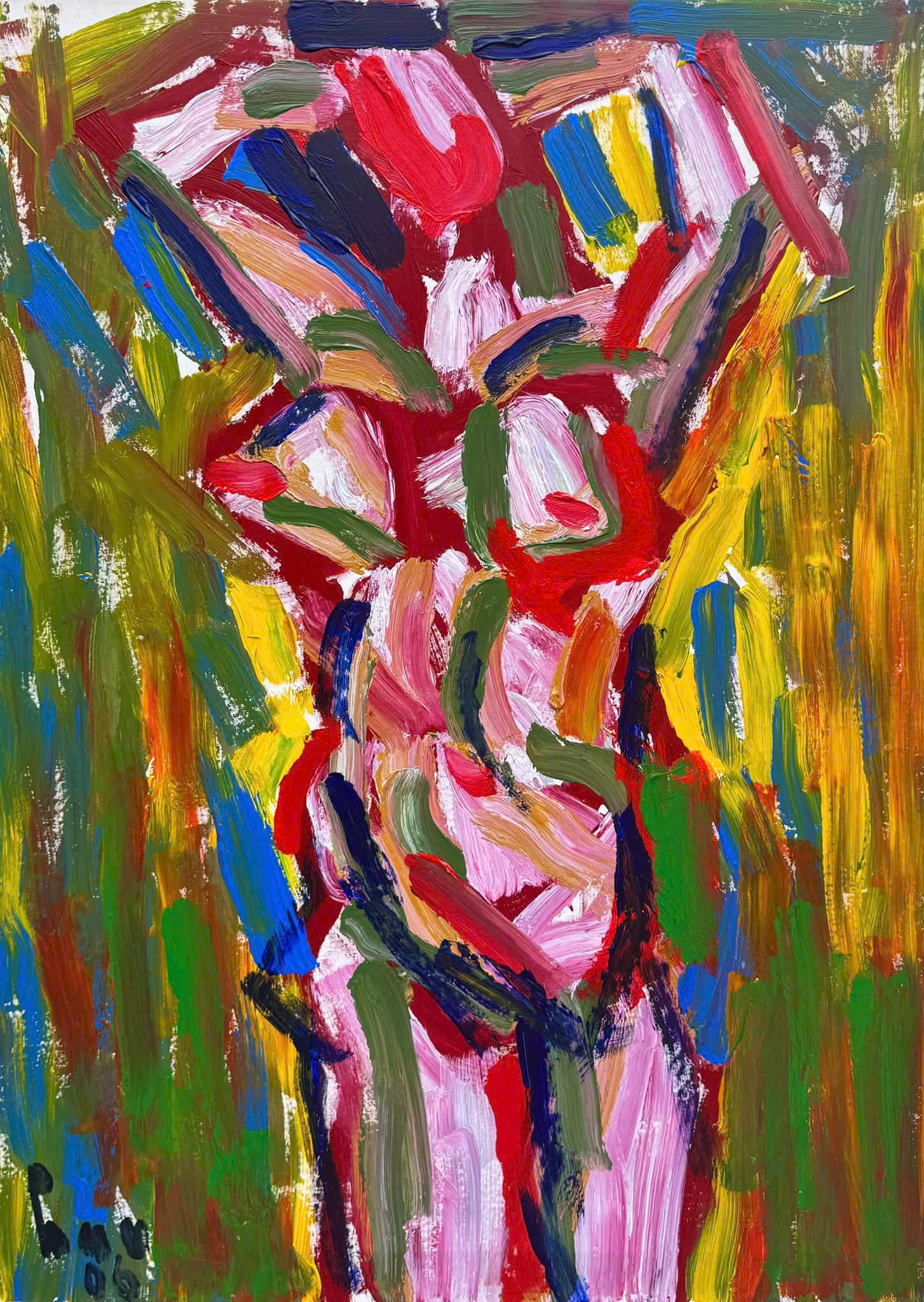
Tran Luu Hau often started from things close to everyday life, such as landscapes, people, flowers, trees or the female form. However, he did not stop at copying reality.
Through a process of simplifying and transforming imagery, the subject gradually becomes shapes, lines and color. This is also one of the factors that create a feeling that is both familiar and fresh in his paintings.
Notable Themes in Tran Luu Hau’s Paintings
Tran Luu Hau’s artistic career was quite diverse. He explored many themes, from landscapes to flowers, still life, portraits and the figure.
Landscape and Daily Life
Landscapes of Hanoi, Sa Pa, Ha Long, Cat Ba and the mountainous areas of the north appear in many of his works.
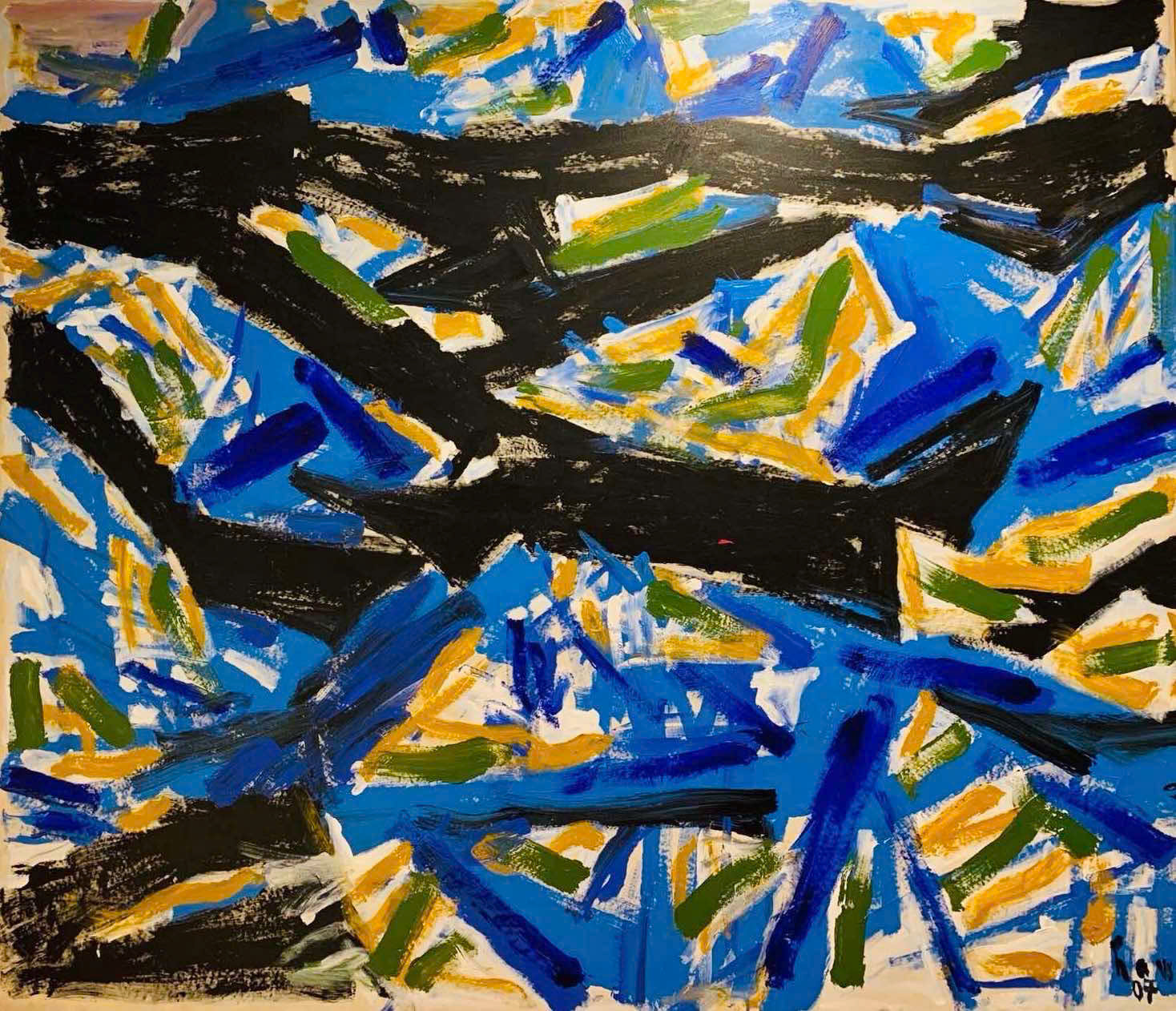
But rather than simply recording scenery, Tran Luu Hau often looked for the rhythm within the space. Mountains, houses, trees, people or roads could be simplified into large areas of color, creating a feeling of movement and rich poetry.
Themes such as Stilt House, Sewing, Spring Comes to the Village and Pack Horses of Sa Pa show his interest in the life and scenery of the highlands.
Flowers and Still Life
Flowers are a familiar subject in Tran Luu Hau’s painting. However, the vases of flowers in his paintings do not feel like mere still-life studies.
The images are reorganized through color, line and mass. Details are held back so that viewers can focus more on the whole and the emotion the work creates.
Portraits, Self-Portraits and the Figure
Tran Luu Hau also paid much attention to portraits, self-portraits and the female form. In these works, he did not necessarily keep the proportions or shapes as observed directly.
Changing the proportions, lines and structure of the body makes the work more expressive. Through this, the figure is seen not only as a subject of form but also becomes a means of expressing mood and emotion.
Changes in His Artistic Thinking in Later Years
One notable point in Tran Luu Hau’s career is that he never stopped changing his painting language over time.
Especially from around the 1980s onward, the imagery in his paintings tended to be simplified more strongly. The boundary between figuration and abstraction became increasingly flexible.
This shows that Tran Luu Hau did not see style as an unchanging template. For him, creating was a process of continuous experimentation.
Even in old age, he continued to travel to see the real world and to seek inspiration from nature and daily life. His trips to Sa Pa in the last years of his career are proof of the artist’s enduring spirit of artistic labor.
Tran Luu Hau and His Place in Modern Vietnamese Art
Tran Luu Hau’s value lies not only in the number of his works or the length of his artistic career. His more noteworthy contribution lies in his creative spirit and his view of freedom in painting.
He absorbed many influences from international art, including names such as Henri Matisse, Chaim Soutine and Willem de Kooning, but did not simply copy their styles. Those influences were transformed through the experience, culture and sensibility of a Vietnamese artist.
Tran Luu Hau’s paintings have also been presented in many collections at home and abroad, and have appeared at international art auctions. This helps show the growing interest in Vietnamese art on the international art market.
The Legacy of the Painter Tran Luu Hau
Looking back at the journey from someone who studied art during the resistance to an influential artist in modern Vietnamese art, Tran Luu Hau left a legacy that is both personal and valuable to the history of the nation’s art.
He passed through many different artistic environments: from Viet Bac during the resistance, his studies in Moscow, to many years of teaching and creating in Vietnam. Each period contributed to making a Tran Luu Hau who could take in the new while keeping his own voice.
What makes the painter Tran Luu Hau likely to be remembered for a long time is his spirit of constant exploration. In his paintings, reality does not disappear but is seen again in another language: stronger in color, freer in line and richer in emotional expression.
With his contributions in creating, teaching and the search for his own painting language, Tran Luu Hau holds a noteworthy place in the history of modern Vietnamese art. His legacy lies not only in his paintings but also in his creative thinking: an artist needs to observe life and take in new influences, but above all must find his own voice.

10/04/2020
Ethereal Charm - Vietnam artist Ho Huu Thu
Most important artist of Gia Dinh Fine Arts College
DETAILS


12/22/2017
The famous Vietnamese sculptor and painter Lê Công Thành
Le Cong Thanh and the question of the human condition
DETAILS

10/13/2017
“Day, Night and Day” Exhibition by Artist Nguyễn Tấn Cường
Solo exhibition of Vietnam Artist Nguyen Tan Cuong
DETAILS


10/05/2017
A Showcase of Contemporary Vietnamese Art
The exhibition of Ha Tri Hieu is curated by Tran Luong
DETAILS

02/24/2017
Vietnam Artist Dang Xuan Hoa
The one of most important artists of the late 20th century
DETAILS

02/12/2017
GIADINH FINE ARTS SHOOL – HOCHIMINH FINE ARTS UNIVERSITY
Gia Dinh Fine Arts School
DETAILS


12/14/2016
Le Thang is the one of best 3D goldfish artists
Beautiful 3D Goldfish Paintings from Vietnam artist
DETAILS