1. Nguyen Trung and His Artistic Foundations at Gia Dinh School of Fine Arts
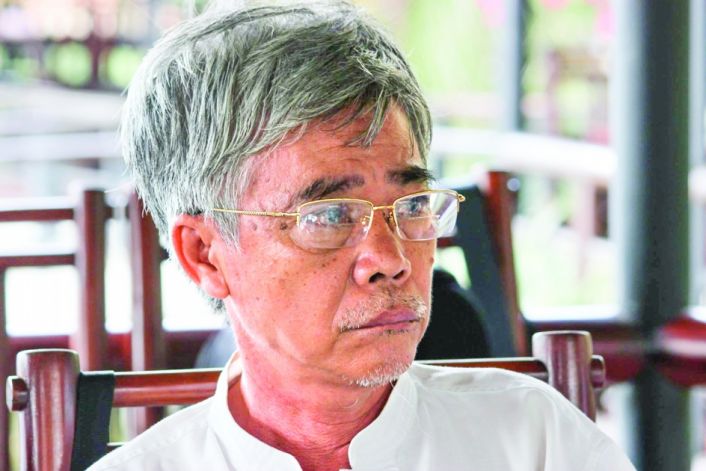
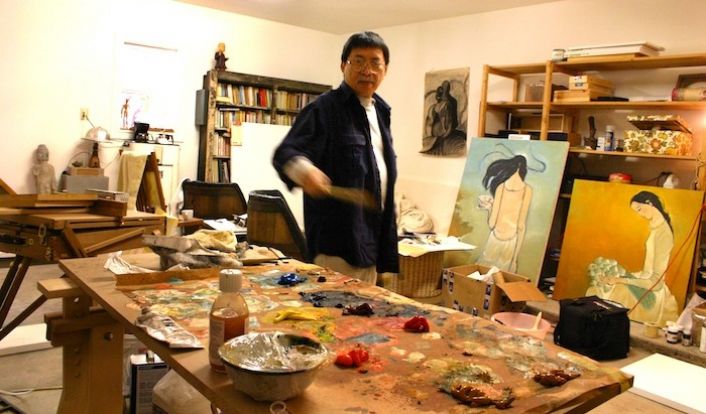
Nguyen Trung was born in 1940 in Soc Trang, a province in Vietnam's Mekong Delta. He currently lives and works in Ho Chi Minh City. In 1958, he began studying at Gia Dinh School of Fine Arts in Saigon, an educational institution that played an important role in shaping several generations of Southern Vietnamese artists.
His first artistic achievements came at a remarkably young age. In 1960, Nguyen Trung received the Silver Medal at the Spring Salon Art Competition. In 1963, he went on to win the Gold Medal at the same art competition. Receiving these two awards while still in his early twenties marked a promising beginning to his professional painting career.
However, rather than regarding these early successes as his ultimate destination, Nguyen Trung gradually became more interested in developing an artistic language of his own. This desire would become the foundation for the significant transformations that followed in his artistic journey.
2. The Figurative Period: Female Beauty and Everyday Emotions
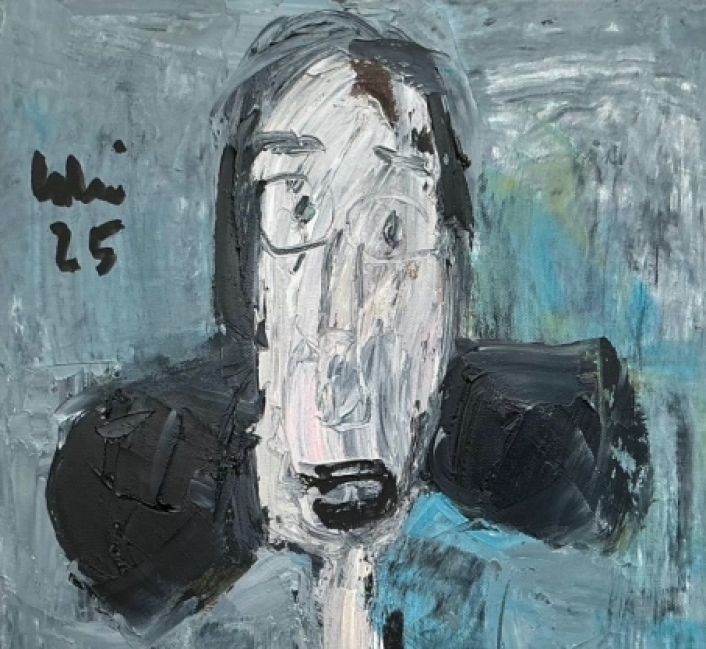
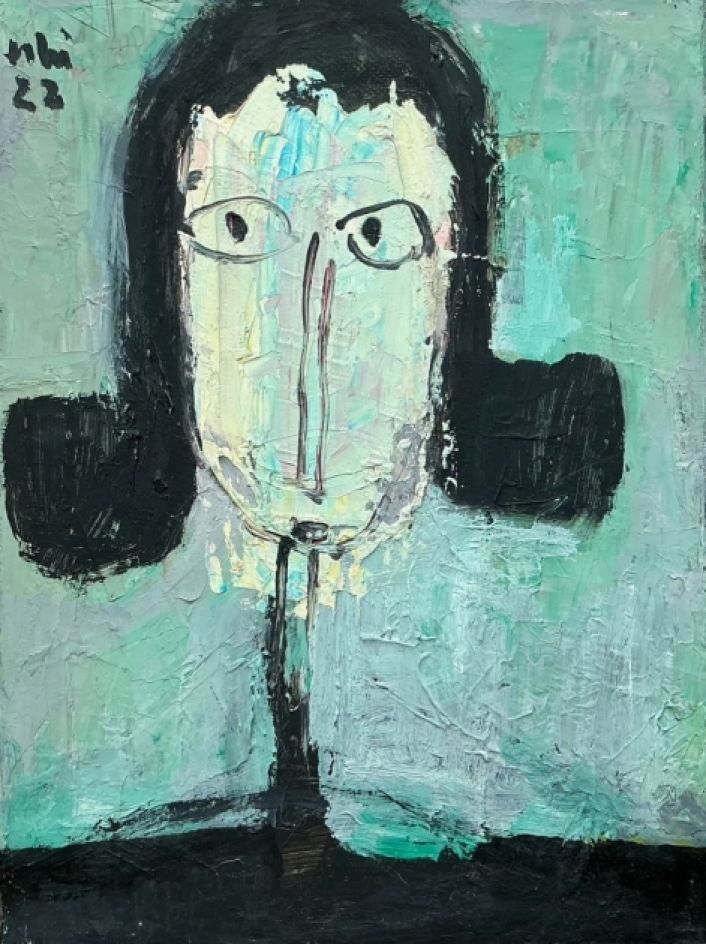
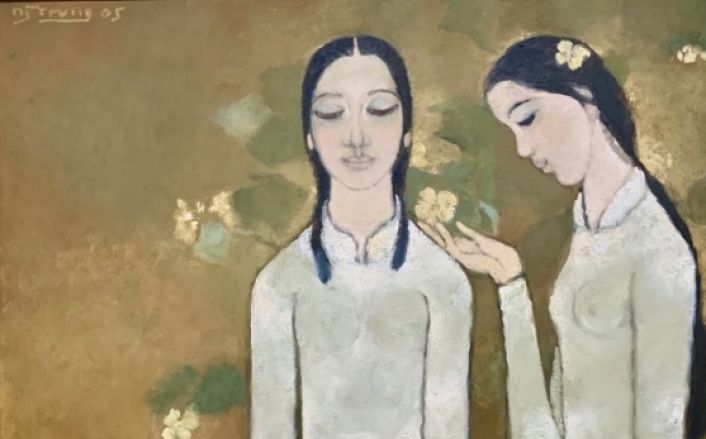
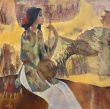
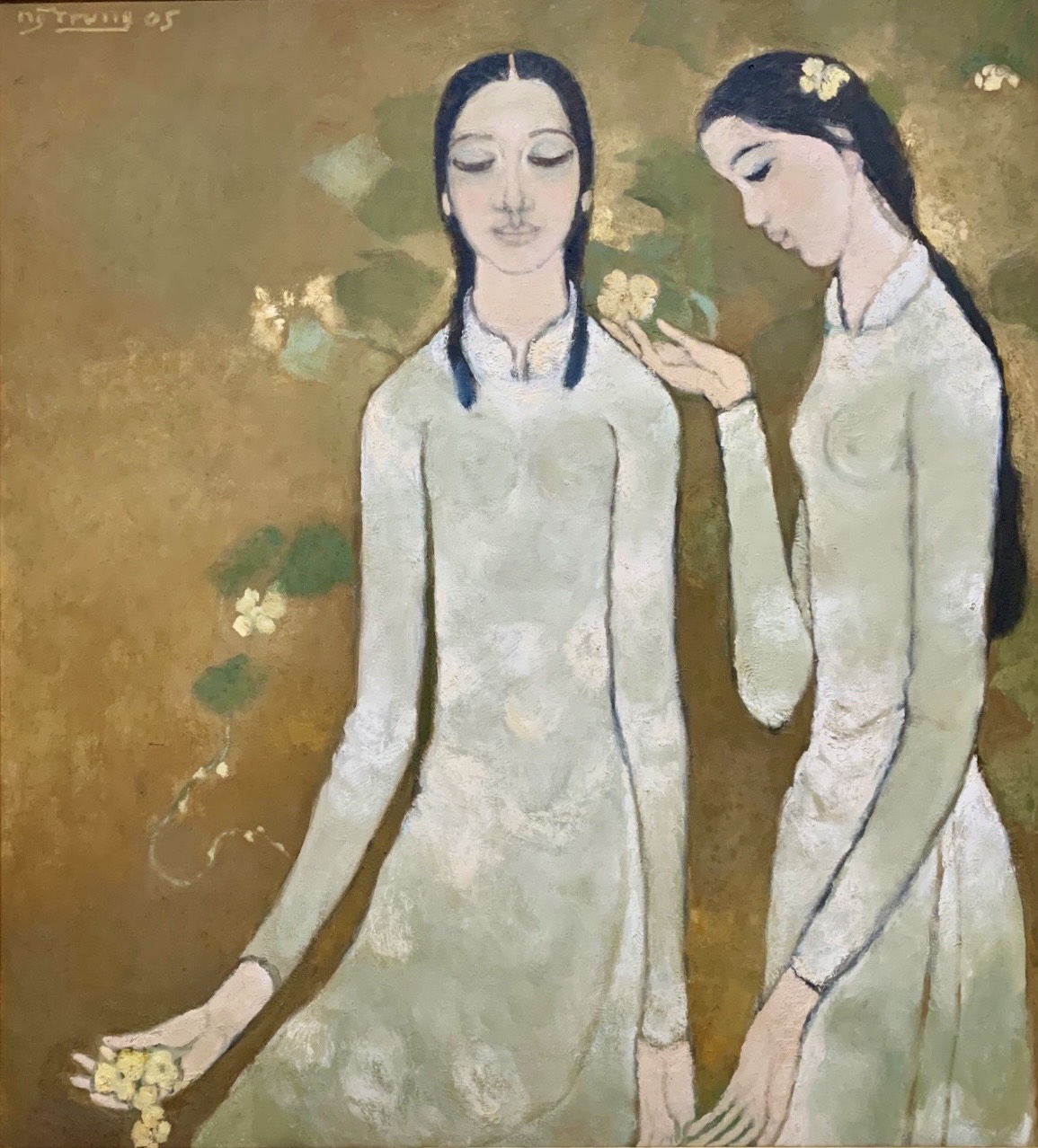
During the early 1960s, Nguyen Trung focused primarily on figurative painting, particularly representations of women. His female subjects often feature delicate faces, elongated necks, contemplative expressions and graceful silhouettes. Rather than emphasizing elaborate depictions of beauty, he paid greater attention to the character and emotions conveyed through each figure.
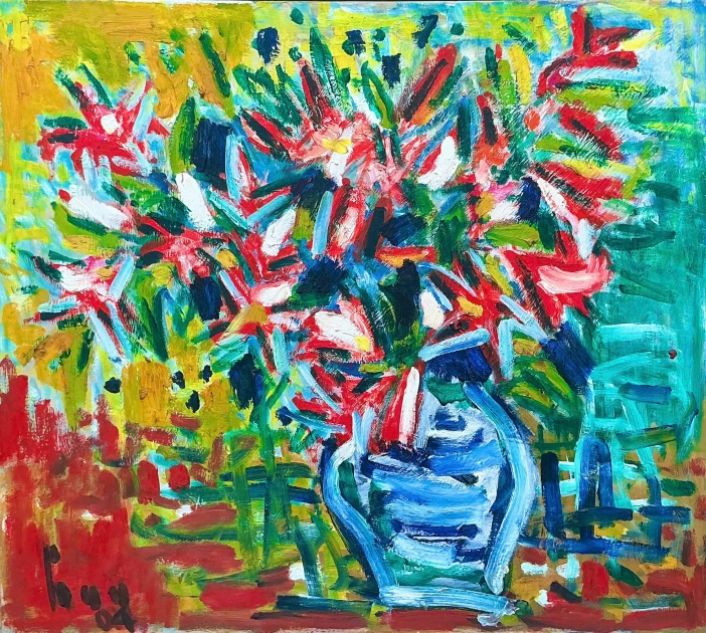
During this period, his paintings reflected a combination of Romantic Realism and explorations influenced by Impressionism and Expressionism. His treatment of human figures, space and colour revealed an engagement with various modern artistic languages. However, he did not simply imitate these influences. Instead, he gradually adapted them to develop an individual artistic perspective.
In 1975, Pink Lotus further demonstrated his interest in female beauty and the cultural heritage of Southern Vietnam. The image of a Cham woman, traditional clothing and visual references associated with Khmer culture were brought together in a richly coloured composition. This work illustrates how cultural identity in Nguyen Trung's paintings does not necessarily emerge through the direct representation of recognizable symbols, but can also be found in cultural memories and personal experiences transformed into visual expressions.
Not all his works from this period focused on female subjects. Paintings such as The New Frontline (1976) and Portrait of a Soldier (1984) demonstrate his exploration of themes connected to historical and social circumstances. This diversity gave his figurative period multiple layers of meaning, extending beyond a single subject or artistic theme.
3. Nguyen Trung and His Role in Saigon's Art Movement
In 1967, he joined the Young Artists Association of Vietnam, a collective of artists seeking to establish a new identity for Southern Vietnamese art. Artists associated with this movement were interested in developing modern artistic languages while maintaining meaningful connections with Vietnamese society and cultural traditions.
Nguyen Trung served as Chairman of the Saigon Young Artists Association from 1969 to 1973. This position reflected his presence not only as an individual artist but also as an active contributor to the development of the artistic community and the exchange of ideas among artists of his generation.
After 1975, he continued participating in artistic research and professional exchange. From 1991 to 1997, Nguyen Trung co-founded and edited the Fine Arts Journal of the Ho Chi Minh City Fine Arts Association alongside fellow artist Ca Le Thang. This work expanded his role beyond that of a painter, allowing him to contribute to the development of a platform for artistic discussion and exchange.
From this perspective, Nguyen Trung was an artist with a multifaceted career. He pursued painting, participated in organizing the artistic community and contributed to bringing professional discussions about fine arts closer to the public.
4. The Turning Point Toward Abstraction: Painting as a Journey of Inner Exploration
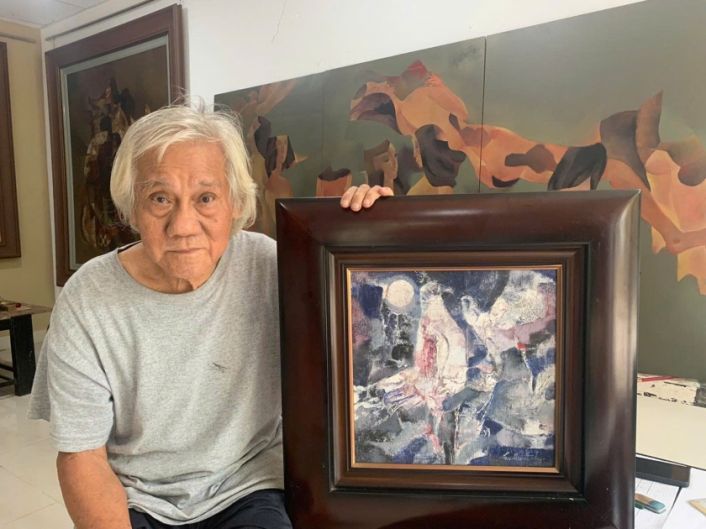
While his early career brought him recognition through figurative paintings, the beginning of the 1990s marked an important transformation in Nguyen Trung's artistic journey: a stronger commitment to abstract painting.
In fact, he had already begun experimenting with abstract elements during the 1980s. However, his stay in France between 1990 and 1991 is considered an important milestone in his artistic development.
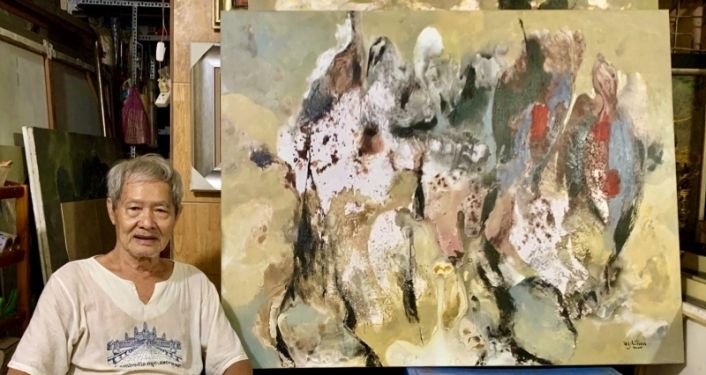
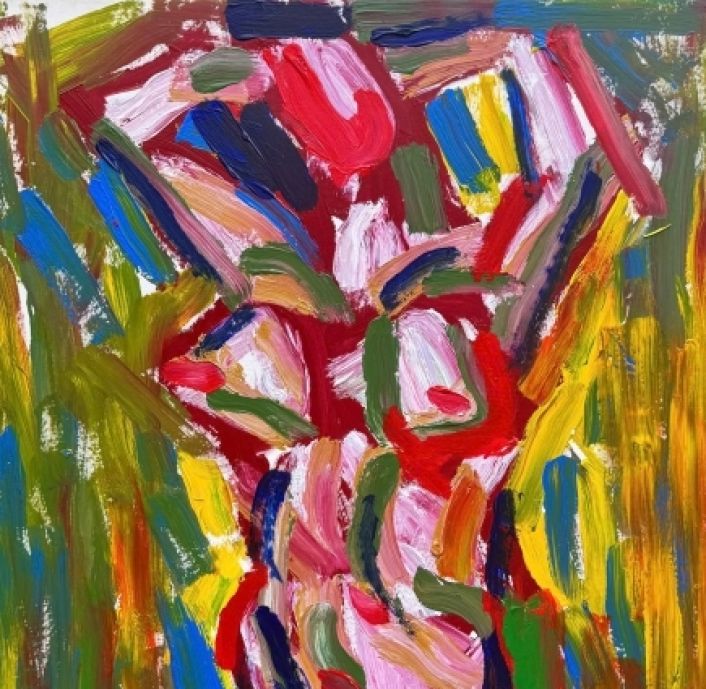
These experiences broadened Nguyen Trung's understanding of painting. Rather than focusing on the representation of specific people or objects, he began exploring compositions through colour fields, lines, surfaces and visual rhythms. His paintings no longer needed to tell a clearly defined story. Instead, they could create an open visual space in which viewers were invited to experience and reflect.
Another notable aspect of Nguyen Trung's abstract paintings was his experimentation with materials. He once worked with papier-mâché, a material made from paper pulp mixed with adhesive, to create distinctive surface textures. After this period of experimentation, he gradually returned to flatter surfaces, expressive lines and simpler brushstrokes.
Colour became considerably more restrained in many of his later abstract works. Rather than relying on excessive decorative elements, he focused on the interaction between brushstrokes, empty spaces and the physical surface of the painting. Each stroke could become a trace of an emotional state, a thought or a particular moment of artistic creation.
Importantly, Nguyen Trung did not completely abandon his figurative period. At certain points, he returned to recognizable imagery while continuing to explore new possibilities within abstraction. His artistic transformation should therefore be understood as an ongoing expansion and dialogue between different forms of expression, rather than an absolute replacement of one style with another.
5. The Group of Ten and the Expansion of Abstract Painting in Vietnam
During the development of abstract art in Vietnam, Nguyen Trung emerged as one of the notable figures contributing to its advancement. Between 1990 and 1996, he was closely associated with the annual exhibitions of the Group of Ten in Ho Chi Minh City and Hanoi.
In 1992, a major abstract art exhibition was organized at Hong Hac Gallery, bringing together more than 40 artists from different regions of Vietnam. The event became a noteworthy milestone in introducing and expanding the presence of abstract painting in the country's art scene.
Nguyen Trung's contribution to the group extended beyond his individual artworks. He also helped create an environment in which artists could experiment, introduce new artistic directions and exchange ideas about the future development of contemporary art.
For an art scene that had long been associated with more readily recognizable forms of visual expression, the emergence of exhibition spaces dedicated to abstract painting carried particular significance. It broadened the way audiences approached an artwork, encouraging them not only to look for familiar imagery but also to appreciate emotion, structure and visual experience.
6. National Exhibitions and International Recognition
Nguyen Trung's exhibition career spans several decades. His first solo exhibition was held in 1967 in Saigon. In 1990, he continued presenting his works at Maison du Vietnam in Paris, France.
In the following years, his solo exhibitions included Revelations of Time and Self (1999) in Hanoi, The White Series (2001), Blackboard (2004) and Grey White Black (2010) in Ho Chi Minh City. These exhibitions demonstrated his continued exploration of different approaches and visual expressions within painting.
In 2014, he presented his works at Insight – Art Basel Hong Kong. This marked an important milestone in bringing Nguyen Trung's paintings to international audiences and collectors.
In addition to his solo exhibitions, he participated in numerous artistic events in France, Italy, Singapore, Japan, South Korea, the Philippines, the United States and the United Kingdom. Notable exhibitions included Vietnamese Art from 1925 to Today in Paris in 1998, The New Face of Vietnam in Seoul in 1997 and Personal Structures in Venice in 2017.
7. Institutional Collections and Nguyen Trung's Place in Vietnamese Art
Nguyen Trung's works are represented in several prestigious art collections, including the Ho Chi Minh City Fine Arts Museum, the Vietnam Fine Arts Museum in Hanoi and the Singapore National Art Museum.
The presence of his works in these collections demonstrates that his paintings have been exhibited and preserved in different artistic environments, ranging from public museums to collections held by financial institutions.
Looking back at Nguyen Trung's artistic journey, perhaps the most remarkable aspect is not his success within any particular style, but his ability to continually challenge the boundaries he has established for himself. From female figures and everyday subjects to abstract compositions rich in introspection, he has consistently sought to expand the expressive possibilities of painting.
Nguyen Trung is therefore more than an artist whose career has spanned several historical periods. He is also a representative of the spirit of exploration and innovation in modern Vietnamese art. Through the transformations in his artistic practice, his journey offers a thought-provoking reflection: sometimes, an artist's greatest achievement does not lie in the style they have established, but in the courage to move beyond it and continue exploring new possibilities.